The Jordaan: courtyards, brown cafés and galleries
June 22, 2026
The Jordaan is arguably Amsterdam's most beloved neighbourhood. Narrow canals, window-box gardens, creaking wooden bridges and an atmosphere that feels both authentic and alive. Anyone considering booking a B&B in Amsterdam should put the Jordaan at the top of their list.
What makes the Jordaan so special?
The Jordaan developed in the seventeenth century as a working-class district, just outside the canal ring. Craftsmen, labourers and immigrants lived here in close quarters. That history is still tangible in the scale of the streets and the mix of small shops, studios and homes. The neighbourhood borders central Amsterdam but feels completely different: quieter, more human-scaled and with far less tourist traffic on the main routes.
What makes the Jordaan unique is the combination of well-preserved architecture and an active cultural life. There are no large museums or major attractions, but instead a layered character that reveals itself slowly. Every alley, every courtyard and every brown café has its own story.
The hofjes: quiet oases in the heart of the city
The Jordaan contains a handful of historic courtyard gardens open to the public. The Begijnhof lies a little further towards central Amsterdam, but the hofjes within the Jordaan itself, such as the Karthuizerhof and the Claes Claeszhofje, are less well known and therefore quieter. You enter through a narrow gate and find yourself suddenly in a world without traffic, with flower boxes, grass and the soft sounds of the city drifting in from beyond.
A visit calls for silence and respect: the hofjes are partly still inhabited or managed by foundations. Go early in the morning for the best atmosphere and the fewest visitors.
Brown cafés: the heart of the neighbourhood
Brown cafés are Amsterdam's traditional pubs, named after the brown hue of walls and ceilings built up over decades of tobacco smoke and woodfires. The Jordaan is home to some of the oldest and most cherished examples in Amsterdam. Café 't Smalle on the Egelantiersgracht dates back to 1786 and has a terrace right on the water. Café Nol on the Westerstraat is known for its warmth and the spirit of the real Amsterdam working-class neighbourhood.
In a brown café you order a beer or a jenever, take a seat and let time slow down. There is no rush, no waiting for a table and no dress code. These are places to strike up a conversation with locals or simply to enjoy the intimacy of the space.
Galleries and studios: art within walking distance
The Jordaan has a long tradition as an artists' quarter. You will still find dozens of small galleries scattered across the streets and alleyways. The Elandsgracht and the Hazenstraat are well-known gallery streets where you can view contemporary art free of charge. Most galleries work with rotating exhibitions, so no two visits are the same.
Alongside galleries there are also working artists' studios, sometimes visible through shopfront windows. During events such as Open Ateliers Amsterdam, artists open their doors to the public. Ask at your B&B about upcoming dates for such events.
Shopping and markets
The Jordaan has its own retail scene, very different from the bustle of the Kalverstraat in central Amsterdam. You will find boutiques with vintage clothing, specialist shops for cheese, coffee or cacao, and antique dealers displaying their wares on the street. The Noordermarkt is the centre of the neighbourhood every Saturday, with an organic farmers' market and a flea market. On Mondays the flea market returns on a smaller scale.
Staying in and around the Jordaan
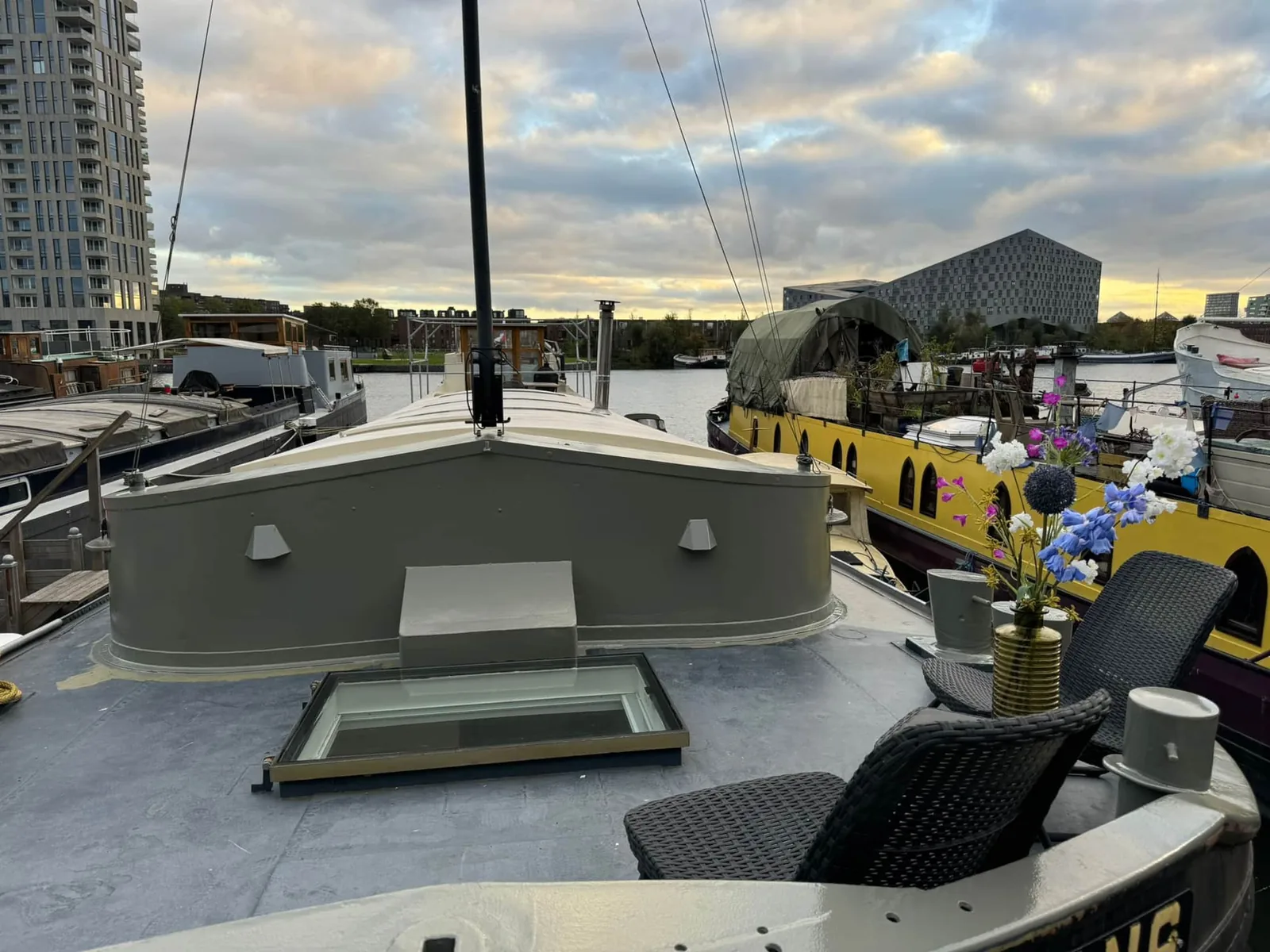
Booking a B&B in Amsterdam in or near the Jordaan means waking up in a neighbourhood within walking distance of everything the area has to offer. Many B&Bs in this part of Amsterdam are housed in canal houses with authentic details such as high ceilings, wooden floors and original facade stones. You have breakfast, step outside and immediately become part of the daily rhythm of the neighbourhood, well away from the main tourist crowds.
Where to stay
Frequently asked questions
How do I get from central Amsterdam to the Jordaan?
The Jordaan is within walking distance of central Amsterdam and Amsterdam Centraal station. From the city centre you can walk in via the Raadhuisstraat or the Brouwersgracht. No tram or metro runs directly through the Jordaan, but the surrounding streets are well served by tram 13 and tram 17 along the Marnixstraat.
When are the hofjes in the Jordaan open to visitors?
Most hofjes in the Jordaan are accessible during the day, generally between 10:00 and 17:00, but exact times can vary by courtyard and season. On Sundays and public holidays some hofjes are closed or have restricted access. Always check on site or with the managing foundation before planning your visit.
Is the Jordaan suitable for a stay with children?
The Jordaan is manageable with children. The neighbourhood has little heavy car traffic, there are small playgrounds along the canals and the Noordermarkt on Saturdays offers plenty to see and experience. The Anne Frank House, on the edge of the Jordaan, is suitable for children from around ten years of age. Do be aware of narrow pavements and bridges without railings: a pushchair can be tricky in some spots.